DoorDash's Text-to-Order AI Agent: How It Works and What It Costs to Build One
How DoorDash's text-to-order AI agent works, what a smaller delivery business needs to build one, and indicative platform and agent costs.
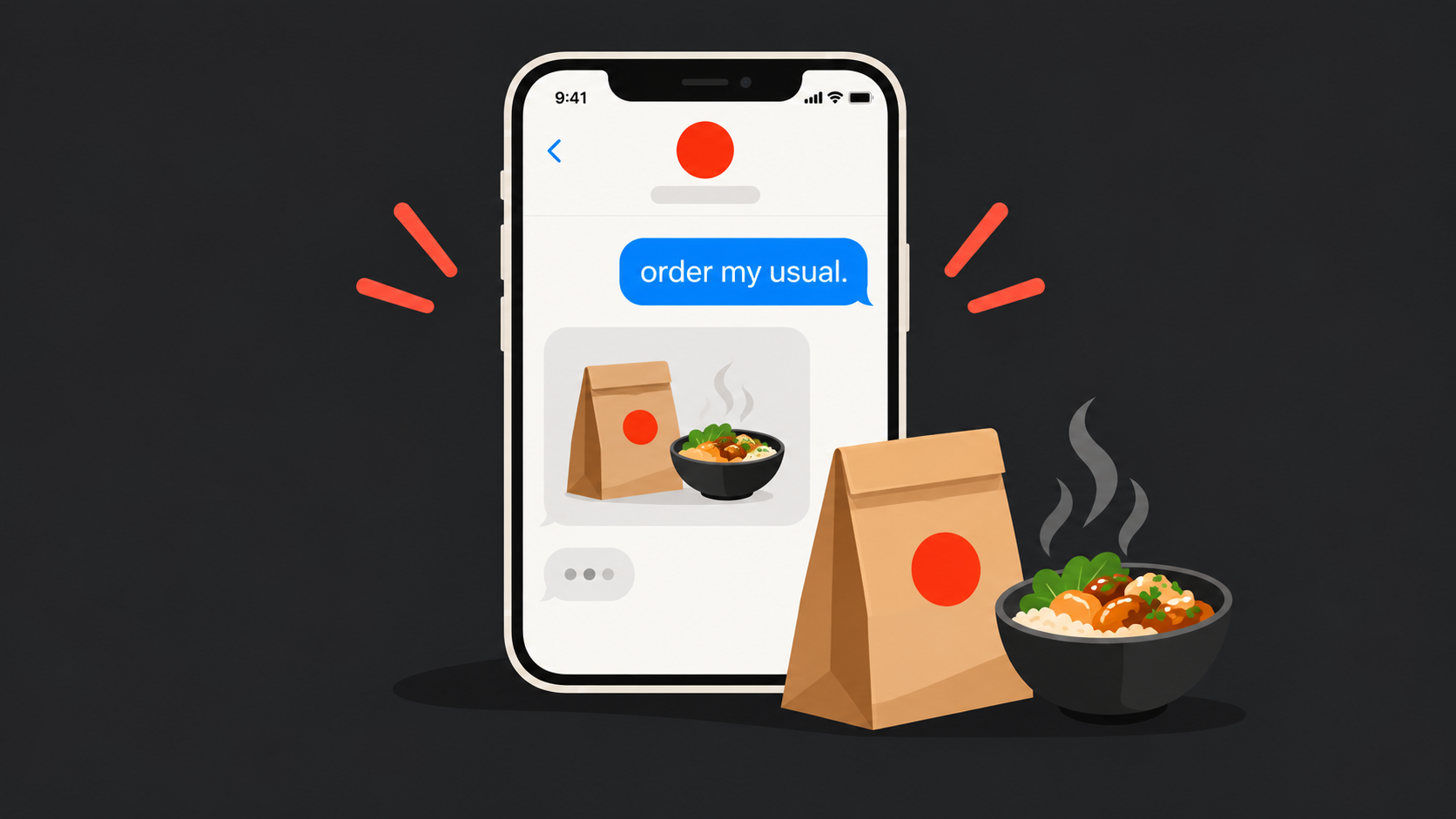
On September 30, 2026, DoorDash announced an AI agent that takes food orders by text message in Apple Messages. No app, no browsing. You text "order my usual" and it handles the rest. Here is what it does, why it matters, and what it would cost to build something similar for your own delivery business.
What DoorDash launched
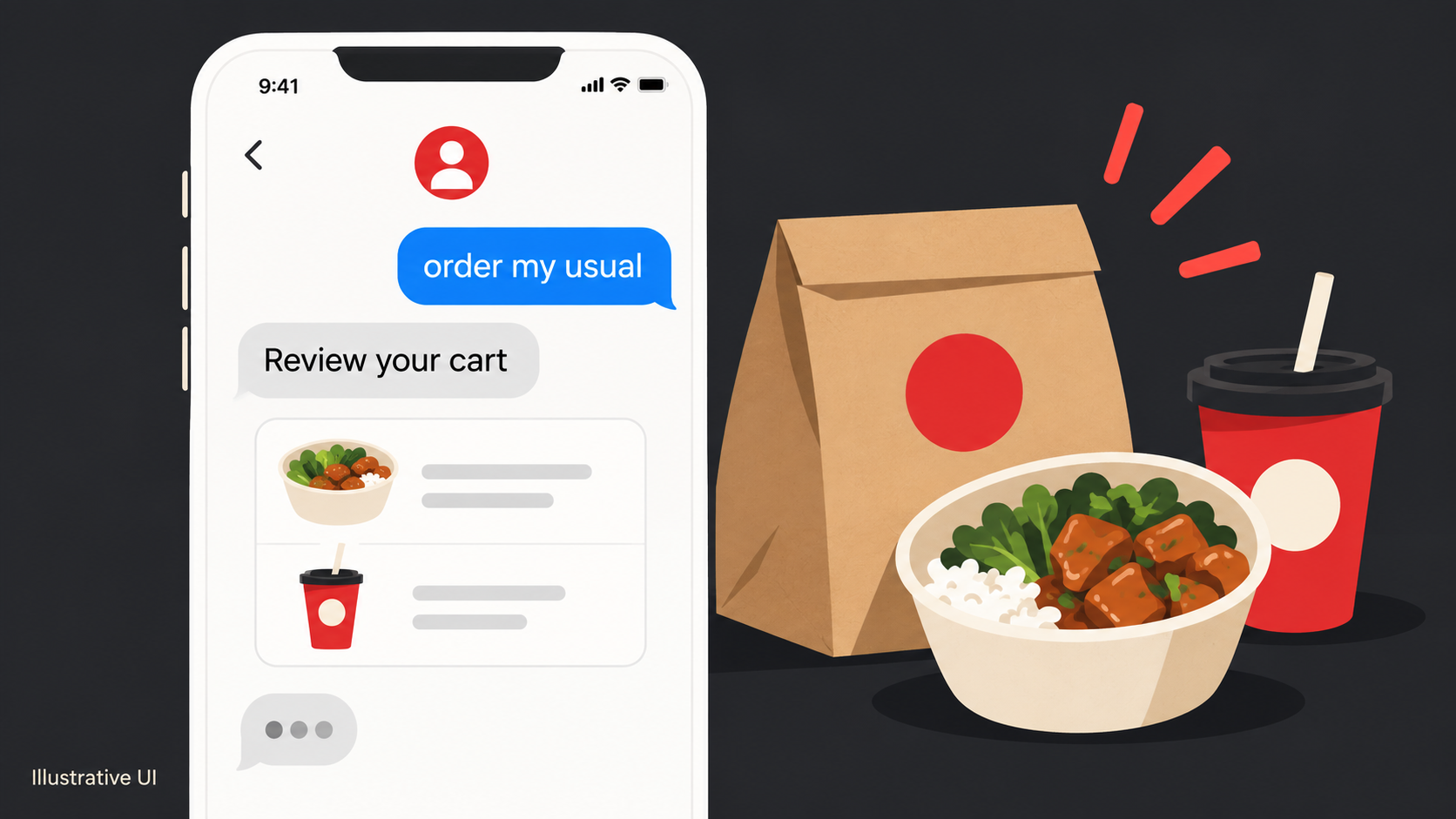
- Order by text. Users message DoorDash in Apple Messages, like texting a friend. Food and groceries are covered, per Business Insider.
- "Order my usual." The agent understands that "my usual" means your Friday night order.
- Recommendations. Ask for a dish or a local recommendation. It searches nearby places, suggests a cart, and can text photos of the food.
- Group orders. It handles mixed dietary needs and different quantities in one order.
- Availability. It is a beta for US customers through a waitlist.
DoorDash also said it will test delivery drones with select restaurants in Northern California.
How it works, in plain terms
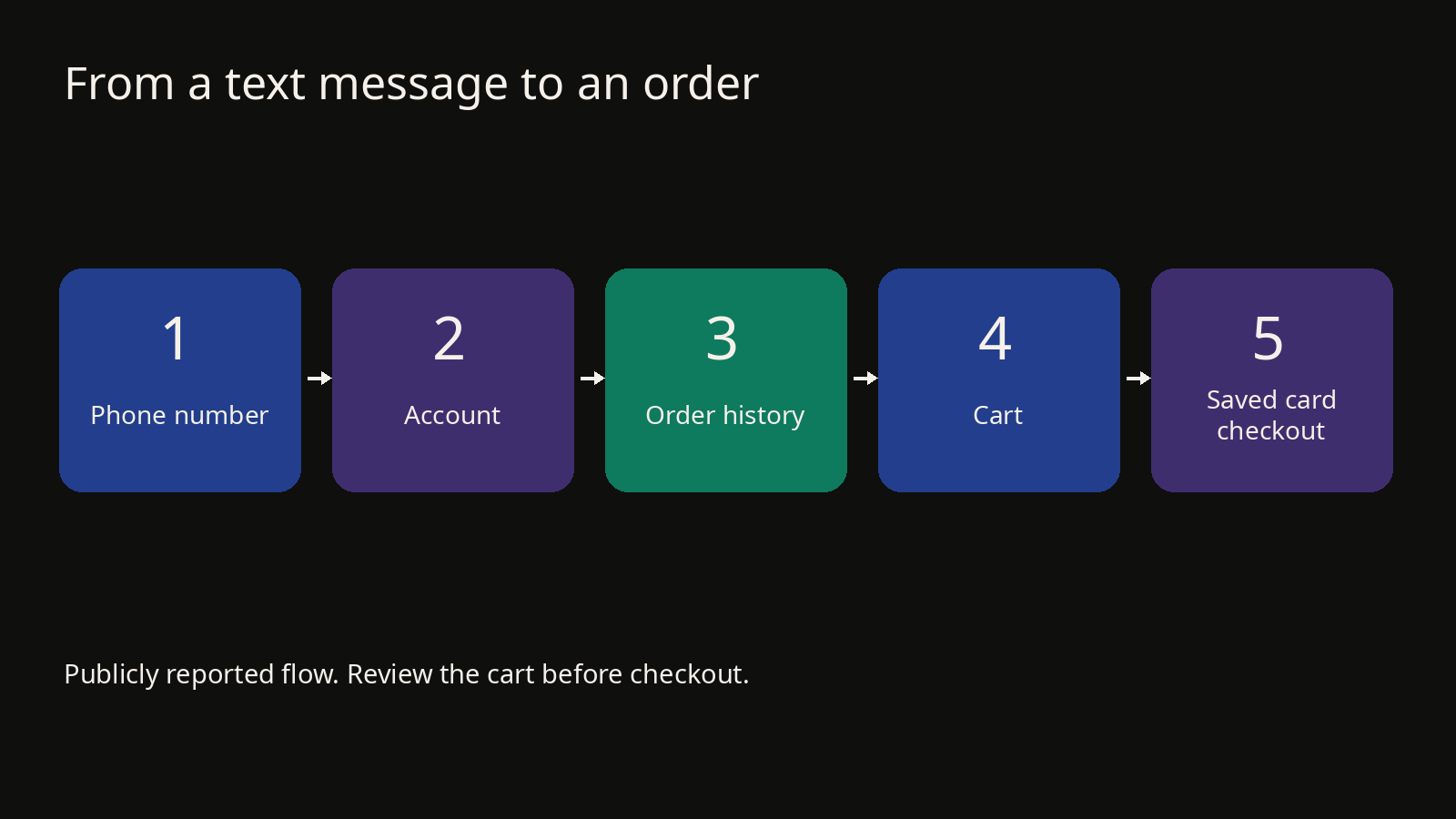
Based on public reporting (The Verge, MacRumors, TechCrunch):
- The phone number is the login. The number used in the conversation links the chat to your DoorDash account.
- It uses your history. The agent draws on previous orders and preferences to build a cart.
- It pays with your saved card. At checkout it uses a saved payment method.
- It builds on an earlier assistant. The text feature extends the "Ask DoorDash" chatbot added to the app in June.
We don't know DoorDash's internal build. The pieces above are what any team needs to replicate the experience.
Why it matters
- Less friction. The app is the biggest drop-off point in ordering. A text removes it.
- Repeat orders win. "Order my usual" turns your best customers into one-message customers.
- It is a race. DoorDash is moving ahead of Uber Eats and Grubhub, as personal AI agents like OpenAI's Dots and Meta's Muse go mainstream. Customers will soon expect to order by chat.
Can a smaller delivery business do this?
Yes, at a smaller scale. You don't need DoorDash's marketplace. You need a working ordering platform plus an agent on top of it.
Three building blocks:
- An ordering platform with menus, carts, payments and order history.
- A messaging channel such as WhatsApp, SMS or Apple Messages for Business.
- An AI agent that reads your customer's history, builds the cart, asks clarifying questions and checks out, with limits on what it can do alone.
What it costs to build something similar
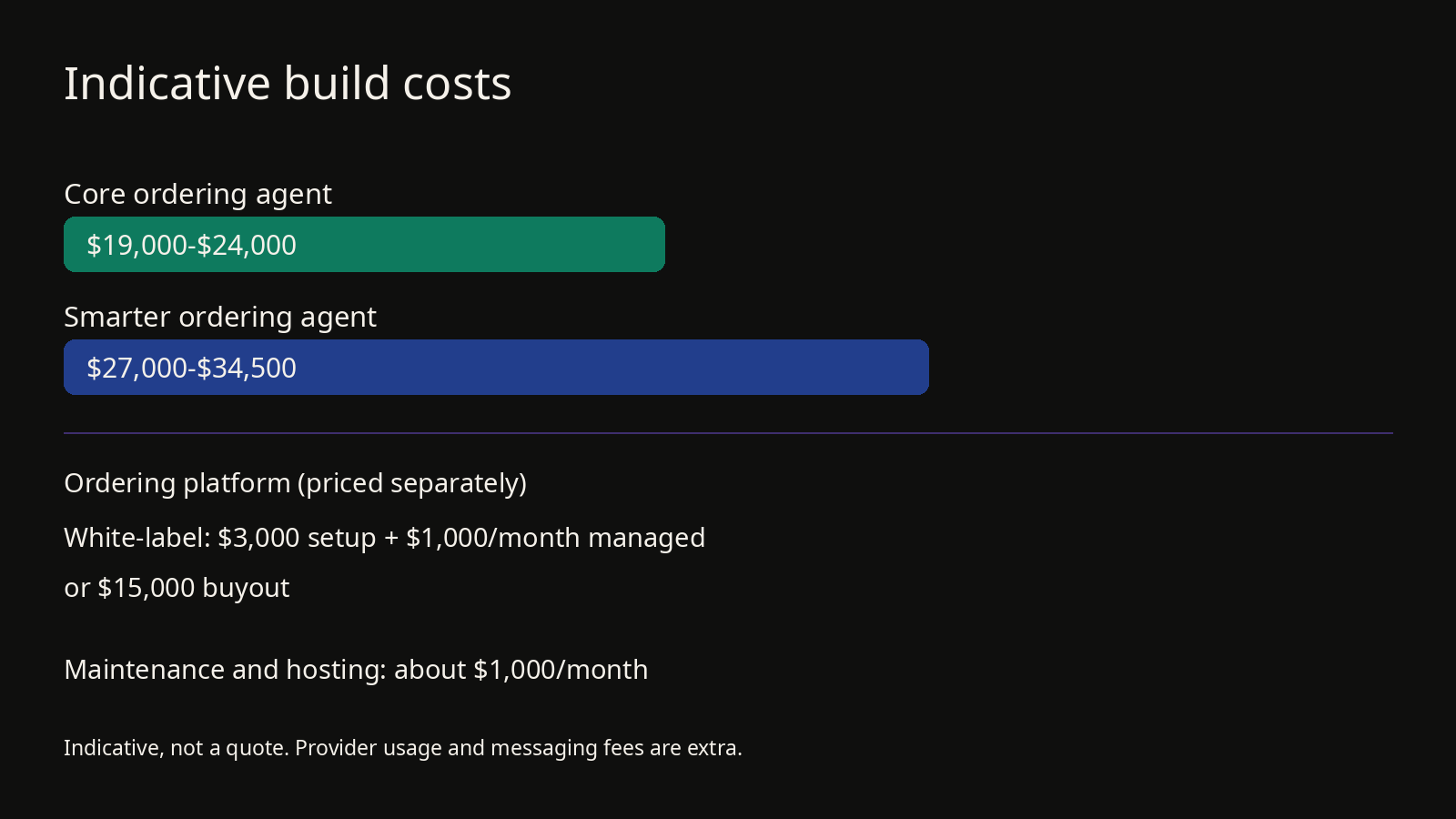
All figures follow our cost calculator logic (base price per project type plus a price per feature). They are indicative ranges, not quotes.
The ordering platform (if you don't have one):
- White-label food delivery: $3,000 setup + $1,000/month managed, or $15,000 buyout.
- Custom food delivery: about $15,500 to $20,000 for the core app, $24,000 to $31,500 with integrations and richer design.
The AI ordering agent on top:
- Core agent (agent with tool use, connects to your menu and order systems, admin panel to review and control it): roughly $19,000 to $24,000.
- Smarter agent (adds retrieval over your menu, order history and customer preferences for better recommendations): roughly $27,000 to $34,500.
After launch: plan on about $1,000 per month for maintenance and hosting. Model usage and messaging fees (SMS, WhatsApp, Apple Messages for Business) are billed by their providers.
What to decide before you build
- Channel. Where do your customers already message you?
- Limits. What can the agent do alone, and when must it ask? Start with reorders and recommendations, not refunds.
- Payments. Reuse a saved method with clear confirmation before checkout.
- Handoff. When the agent is stuck, a person must be one tap away.
Get your own number
Try the cost calculator and pick the features your agent needs.
Want a firm scope for an AI ordering agent? Book a 30-minute discovery call. We confirm pricing after discovery, not before.
Sources: TechCrunch, The Verge, MacRumors, 9to5Mac, Business Insider and Bloomberg Law, all September 30, 2026.