Solo founder? Fix your enquiry-to-paid-work workflow before building a bigger app
Too few enquiries, a declined offer or missed follow-through? Diagnose the problem first, then choose the smallest useful enquiry-to-paid-work system for a business of one.
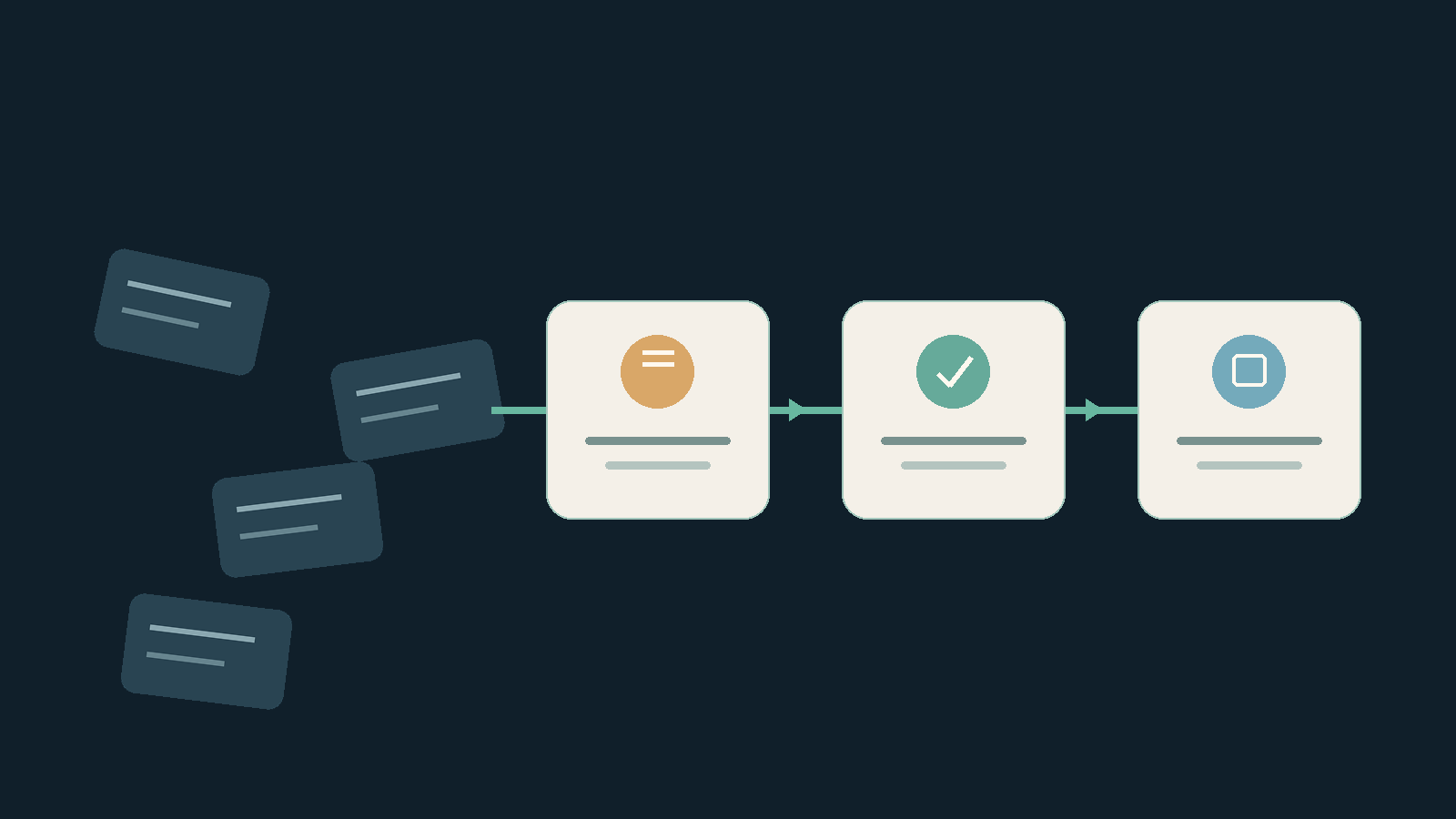
A solo founder running a service business can need less software than a product roadmap suggests. Before commissioning an app, look at the journey from a genuine enquiry to agreed, paid work.
Can a prospective customer explain what they need? Can you see who needs a reply? Does an accepted quote turn into a clear next step? If those handoffs depend on memory, that is a useful place to investigate first.
The goal is not an autonomous sales machine. It is a small, dependable system that helps you handle demand you already have, without losing control of promises, prices or customer information.
Diagnose the problem before automating it
Look back at a manageable batch of recent genuine enquiries. Use what you have; there is no magic sample size, and a handful of requests is a starting point for questions, not statistical proof. Put each request in one list with its date, requested service, your reply, next step and eventual outcome. Do not fill missing history with guesses.
Separate three situations:
- Too few suitable enquiries. If almost nobody is asking for the service, an enquiry workflow will not create demand. Investigate the audience, offer and route by which people find you first.
- People enquire, then decline the offer or price. Ask what they expected and why they stopped. Record the reasons they actually give; silence alone does not tell you whether price, trust or timing was the cause. Reworking your offer may matter more than faster reminders.
- Suitable requests stall between steps. You forget a reply, a proposal has no follow-up date, or an agreed job sits without onboarding. These are candidates for a workflow fix. First check whether a simple list and a repeatable daily review would solve them.
You can have more than one problem. Choose the part you can observe and change, rather than assuming the whole sales process needs automation.
Start with a service you can actually deliver
This guide is for an individual selling a defined service, such as a consultant, designer or specialist tutor. It is not a claim that every solo founder needs the same funnel, or that software creates demand on its own.
Write the offer in one sentence: who it helps, the problem it addresses and what the customer receives. Then check that sentence against real conversations. What have people asked for? What stopped them buying? Which part of delivery can you repeat without inventing a new business for every customer?
An illustrative offer sentence is: "I help independent consultants turn a rough service idea into a clear five-page website, with the agreed pages and revision limits written into the proposal." It names a buyer and deliverable, not a promised increase in sales. Your own sentence should reflect work you can actually provide.
If the offer is still unclear, customer conversations may be a better next investment than automation. A polished intake form cannot decide which problem is worth solving.
A useful first system: enquiry to paid work
Consider an illustrative independent design consultant. Enquiries arrive through a website and direct introductions. The consultant asks the same scoping questions, prepares a proposal, agrees revisions and starts work after the agreed payment condition is met.
The repeated workflow is specific enough to map:
- Capture the request. Keep the customer's contact details, requested outcome, source and date together in one list. Ask only for information needed to assess the work.
- Check the fit. Let the founder review budget, scope, availability and any unusual requirements. Do not let a form or AI score quietly make a commercial commitment.
- Prepare the next action. Draft a reply, offer a suitable meeting route or assemble a proposal from approved information. Keep the actual scope and price under human control.
- Track agreement and payment. Distinguish a sent proposal, an accepted proposal and confirmed funds. A customer saying they will pay is not the same as money received.
- Start delivery cleanly. Once the agreed conditions are met, send the approved onboarding steps and create the delivery checklist. Keep a visible route for exceptions.
For a worked illustration, imagine a customer asks that consultant for a small website. The request enters the list with a reply date. The consultant checks whether the work fits their service and availability, then sends a reviewed proposal with scope, price and revision limits. Acceptance is recorded separately from payment. Only after the agreed start condition is confirmed does the delivery checklist begin. If the customer changes the scope, the job pauses for a revised agreement instead of automatically starting extra work.
This is an example to adapt, not a description of a client result. A tutor selling sessions or a consultant selling a diagnostic review will need different terms, cancellation rules and delivery steps.
Buy the smallest change that fixes the handoff
You have more than one route.
Keep it manual, but make it visible. Start here when volume is low or the process is changing: one list you check every morning, with a next step and date for each genuine request, may be enough. Buying software before you know the steps can make a weak process harder to change.
Configure an existing tool. Try this when your needs match a standard customer-record, booking, proposal or project-management tool. Test the actual journey before building a replacement. Check export options, permissions, integration behaviour and total ongoing costs. A familiar feature name is not proof that your exceptions are covered.
Connect tools you already use. Consider this when your existing tools work individually but you repeatedly copy the same information between them. A bounded integration can carry an approved request into the next system, create a task or flag a missing response. Decide which system owns the record and how duplicates, failures and retries will be handled.
Build a focused workflow or app. Consider custom work when important rules, customer steps or integrations cannot be handled well by the simpler routes. Write down what must work differently and how you will test it. A full mobile app is one possible delivery format, not the starting assumption.
For every paid route, ask for setup costs and ongoing costs separately, including subscriptions, usage charges, maintenance and your own review time. Get the assumptions in writing before comparing quotes. No route here has a universal price.
The useful purchase is a defined improvement to a repeated process, with agreed acceptance checks. It is not a bundle of screens or an AI label.
Where AI can help, and where it should wait
AI can be a candidate for summarising an enquiry, drafting a reply or suggesting which approved service information is relevant. Each use still needs testing with realistic examples, including incomplete and contradictory requests.
A simple rule may be better for a fixed routing decision. A human should remain responsible for exceptions, prices, contractual promises and sensitive decisions unless a separately agreed, tested control makes a narrower action appropriate.
Before connecting customer data, decide what each service receives, who can access it, how long it is retained and how it can be removed. Use test data while checking the flow. Do not put private customer information into a new service merely because it produces a convincing demo.
Define proof before buying more automation
Reuse your enquiry list as a baseline. Choose one bounded change and write down the current steps, known gaps and what you will compare before changing them. Useful questions include:
- How long do genuine enquiries wait for a first useful response?
- How many manual copy-and-paste steps happen per enquiry?
- How many requests have no next step and no date?
- How often do duplicate records, wrong reminders or failed handoffs appear?
- How much founder review does each completed journey require?
Define each measure, its source and the period you will observe. Choose a period that includes enough real work to learn from, and compare similar kinds of enquiries. If volume is too low, say the result is inconclusive rather than extending a small observation into a revenue claim. Count qualified enquiries separately from spam and existing-customer support. Track proposals accepted separately from payments actually received.
Then test the awkward cases: a duplicate enquiry, a changed scope, a cancellation, a failed payment notification and an integration that stops halfway through. Confirm you can recover without sending two replies or starting delivery twice.
A short pilot can reveal whether a workflow behaves as intended. With few enquiries, it may not tell you whether revenue or conversion has improved. Demand, pricing, seasonality and the founder's own follow-through can all affect the result. Report what you observed, not a guaranteed monthly return.
What to ask a software partner to scope
Bring one real customer journey, your existing tools and a few redacted examples of where work gets stuck. Ask for a written scope that separates:
- The workflow being changed, and what stays manual.
- Deliverables, acceptance checks and what you check before anything with a price or promise goes out.
- Data access, failure alerts, recovery and export.
- Setup work, third-party charges, ongoing support and who maintains each connection.
- The baseline, pilot measures and the decision to continue, change or stop.
At Matrytech, you can start a discussion about one repeated workflow or a focused software build. The right route, scope and costs depend on your process and the systems involved. An existing tool may be a better answer than custom development.
The starting question is not "Which app should I build?" It is "Which part of serving a real customer keeps breaking, and what is the smallest reliable way to fix it?"
If you have found a repeated handoff worth fixing, describe where it breaks, which tools you use and what you have already tried. Send Matrytech a workflow enquiry. You do not need to decide on an app before starting that conversation.
This is a practical scoping guide. The consultant example is illustrative. No customer performance result, revenue guarantee or fixed-price package is claimed.