Build an App Like Meta's Muse: How It Works and What It Takes
Meta's Muse passed 5 million downloads in three weeks. How a personal AI agent app actually works, what it takes to build one, and the honest way to scope it.
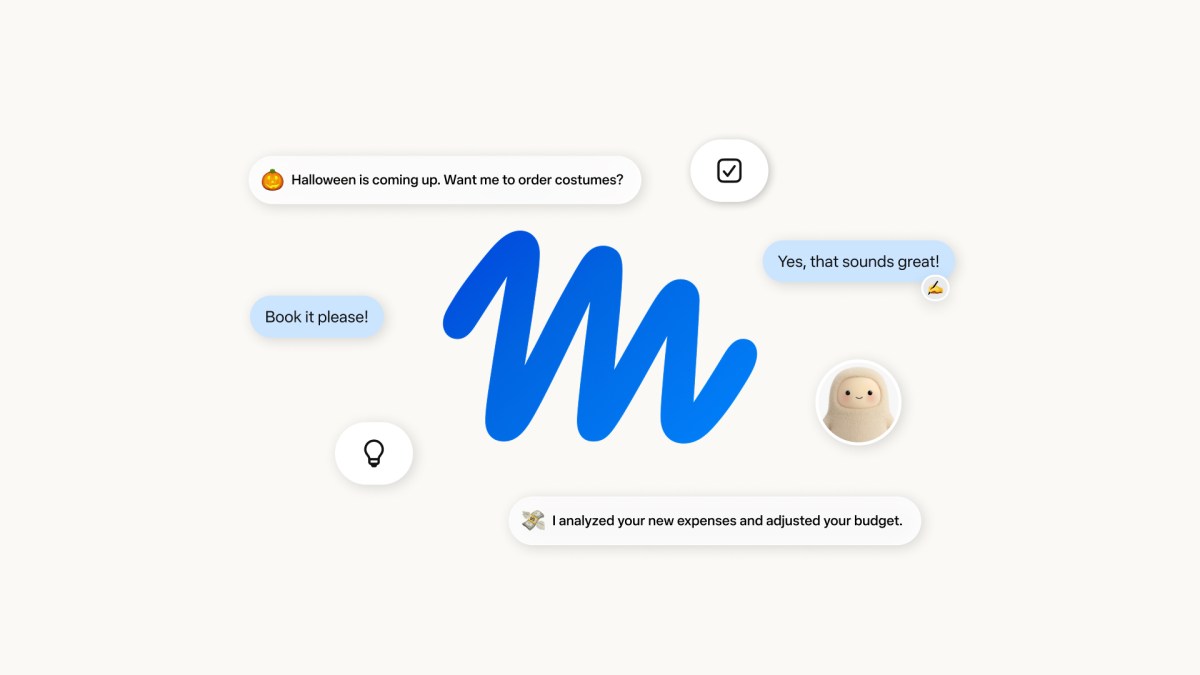
Short answer: a Muse-style personal AI agent app can start small or go big. A single-purpose AI agent does one job well. A workflow agent connects several tools and steps. A full custom agent app adds accounts, billing and an admin panel. What it costs depends on that scope, so we confirm pricing after a discovery call, not before.
What Muse is and why it took off
Meta launched Muse on September 8, 2026, in the US and Canada. It is a personal AI agent: you ask for something and it does it across your apps, such as filling out forms, organizing email, planning trips and making purchases at checkout. It had passed 5 million downloads by September 30, according to Sensor Tower, and it was the No. 1 app on both the Apple App Store and Google Play (Yahoo Finance).
Three things stand out:
- Low barrier. Meta says it needs no technical experience, and you log in with a Meta account.
- Free to start. It is free with a usage limit. Paid plans are $20 and $100 per month for more usage (Meta Help Center).
- Heavy promotion. Meta put a large share of its own ad impressions behind it, per Sensor Tower.
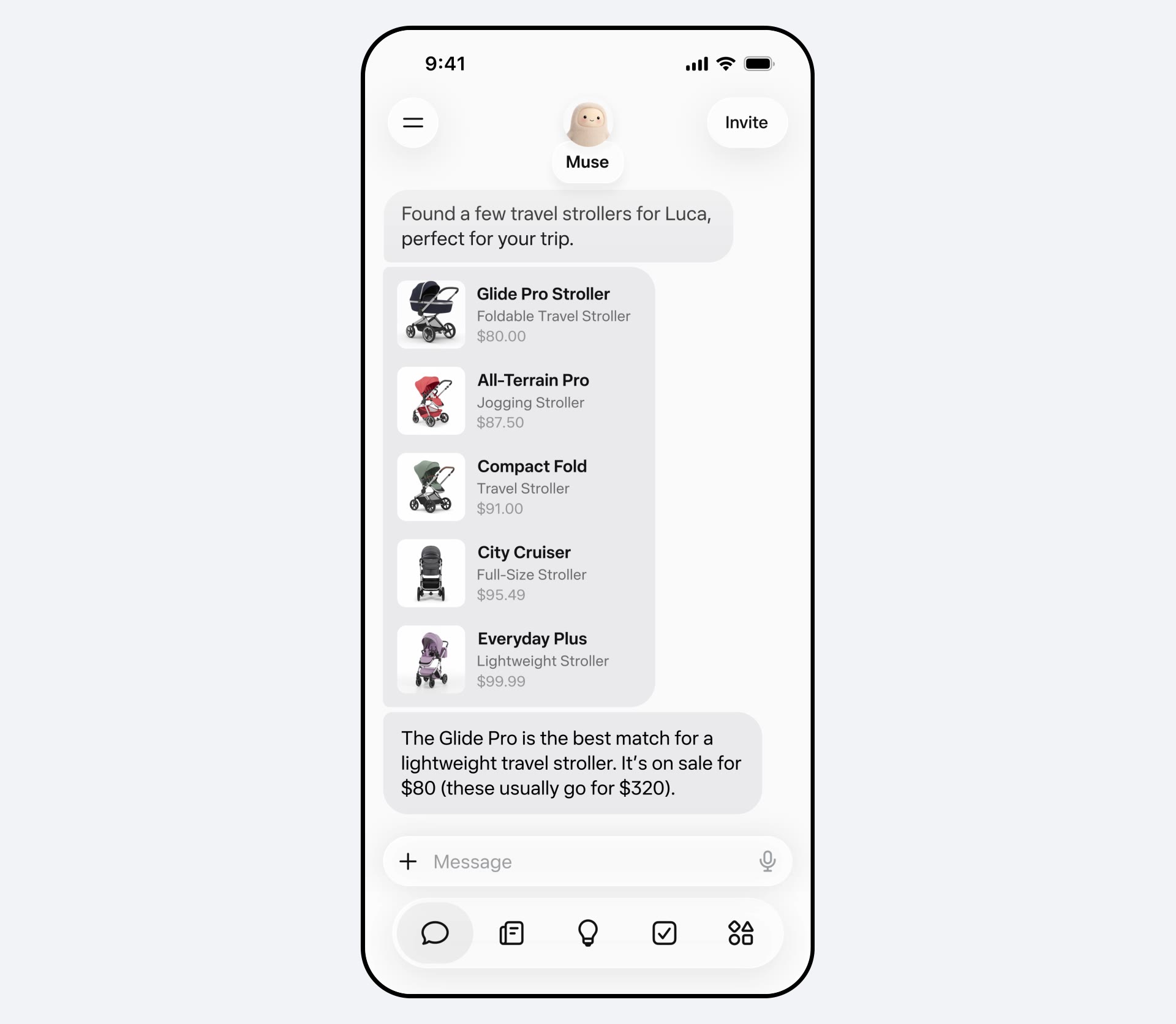
Alt: Muse handling a shopping request end to end, from search to a best pick with prices.
How an app like this works
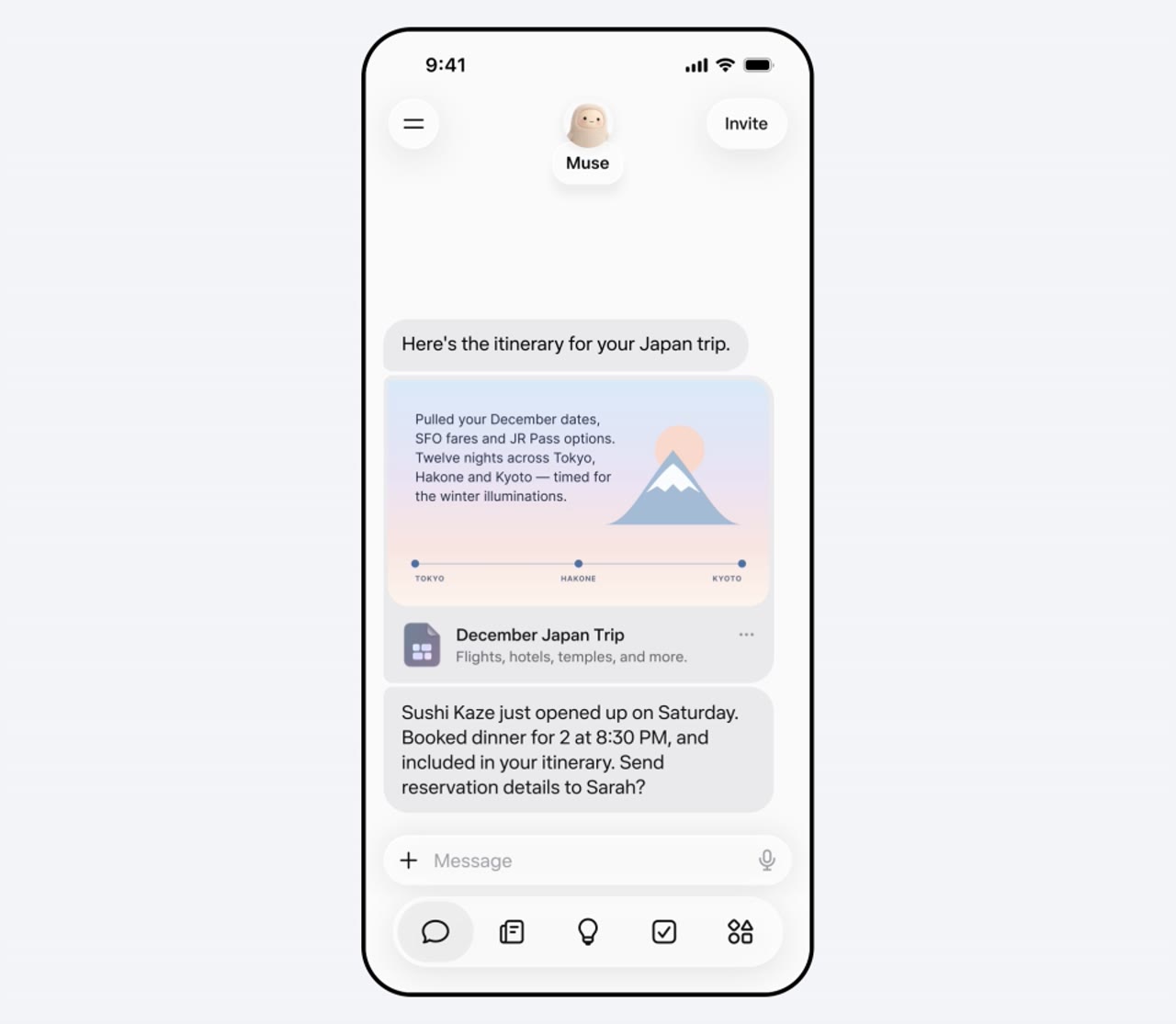
Alt: Muse planning a real trip - dates, fares, stays and reservations in one chat.
Under the friendly avatar, every agent app has the same parts:
- A chat or voice interface where the user asks for something.
- An AI model that turns the request into steps.
- Connectors to email, calendar, shopping, dining and other services. Engadget reports Muse connects to services like Google and Spotify and can build its own connector when one is missing.
- A permission layer. Muse's default is to ask before some actions, and users can change how often it asks.
- Accounts, billing and an admin panel to manage users, usage limits and subscriptions.
The hard parts are not the screens. They are safe connections to other people's accounts, deciding which actions need a human yes, and controlling AI usage cost per user. Muse has also run into limits: Amazon blocked it from its shopping site, and researchers reported a security flaw (Indian Express). Any agent that acts for users needs a plan for both.
What moves the quote
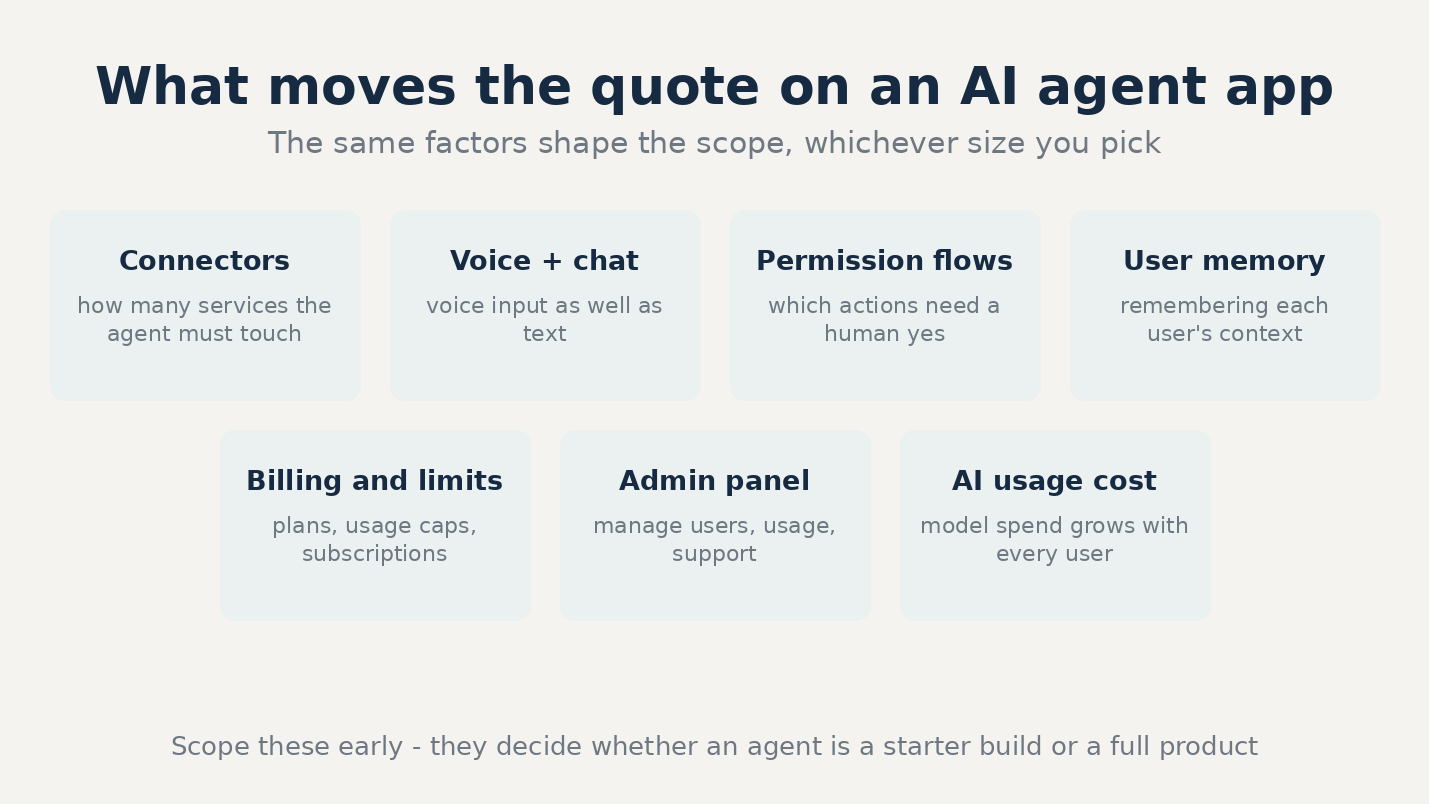
Alt: What raises the quote for an AI agent app.
What moves the quote: how many connectors you need, voice as well as chat, permission and approval flows, memory of each user's context, billing and usage limits, the admin panel, and AI usage cost per user.
Costs outside our price
- AI model usage. This grows with every user, so set usage limits and a pricing plan early.
- Payment gateway fees and App Store and Google Play fees.
- Cloud hosting as users grow.
Should you copy Muse?
Probably not feature for feature. Muse works because Meta can give agent access away for free. A smaller team wins by picking one job and doing it well: an agent for travel, for clinic bookings, for a company's support desk or for field staff. A narrow agent needs fewer connectors, so it costs less and is safer to launch.
We build custom apps first. Source code and IP transfer to you once development is complete and fully paid.
Wondering what it would cost?
Every agent app scopes differently, and the right answer might be a narrower agent than the one you have in mind. Book a 30-minute discovery call and tell us what you are building. You will leave with a firm scope and an honest quote, confirmed after discovery, not before.